


Cotton threads are manufactured through an 11-stage process: cultivation, harvesting, ginning, opening and cleaning, carding, combing, drawing, roving, spinning, twisting, winding, and dyeing. Raw cotton fibers are cleaned, aligned, drawn into slivers, spun into yarn, and twisted into plied threads strong enough for sewing, weaving, and decorative trim manufacturing.
Introduction: Why Every Wholesale Buyer Should Understand Cotton Thread Manufacturing
- Cotton thread manufacturing involves 11 distinct stages, from cultivation to dyeing and finishing.
- Carding and combing determine whether a thread becomes standard-grade or premium-grade.
- Ring spinning produces the strongest, smoothest yarns preferred for decorative trims; open-end spinning is faster but coarser.
- Quality is measured by tensile strength, yarn count, evenness, colorfastness, and shrinkage.
- Long-staple cotton (Egyptian Giza, Pima, Indian Suvin) produces the finest decorative trim threads.
- Wholesale buyers should always request yarn count specifications, colorfastness ratings, and physical samples before bulk orders.
What Is Cotton Thread?
Cotton thread is a tightly twisted strand of spun cotton fibers, engineered for strength, smoothness, and consistency. Unlike loosely spun cotton yarn used for knitting or weaving, thread is plied and twisted to higher specifications, making it suitable for sewing, embroidery, and decorative trim construction.
Composition
Key Characteristics
|
Characteristic
|
Why It Matters for Decorative Trims
|
|---|---|
|
High tensile strength
|
Tassels and tiebacks endure daily pulling and friction
|
|
Excellent dye affinity
|
Enables rich, saturated colors across 15+ color families
|
|
Natural matte-to-soft luster
|
Ideal for classic and heritage interior styles
|
|
reathability & moisture absorption
|
Prevents mildew in humid climates during shipping and use
|
|
Biodegradability
|
Supports sustainable and eco-labelled product lines
|
|
Low static
|
Fringes and cords hang cleanly without attracting dust
|
Industrial Uses
How Cotton Thread Is Manufactured: Step-by-Step Overview
cultivation and harvesting, ginning, opening and cleaning, carding, combing, drawing, roving, spinning, twisting and plying, winding and packaging, dyeing and finishing.
The full journey from bale to dyed cone typically takes 2–4 weeks.
Manufacturing Summary Table
| Stage | Process | Input → Output | Purpose |
| 1 | Cultivation & Harvesting | Cotton plant → Seed cotton | Grow and pick raw fiber |
| 2 | Ginning | Seed cotton → Lint bales | Separate fiber from seeds |
| 3 | Opening & Cleaning | Bales → Loose clean tufts | Remove trash and foreign matter |
| 4 | Carding | Tufts → Card sliver | Disentangle and align fibers |
| 5 | Combing | Card sliver → Combed sliver | Remove short fibers (premium only) |
| 6 | Drawing | Slivers → Drawn sliver | Blend and even out thickness |
| 7 | Roving | Drawn sliver → Roving | Thin, lightly twisted strand |
| 8 | Spinning | Roving → Single yarn | Twist fibers into continuous yarn |
| 9 | Twisting/Plying | Single yarns → Plied thread | Multiply strength and balance |
| 10 | Winding & Packaging | Thread → Cones/bobbins | Prepare for dyeing and shipping |
| 11 | Dyeing & Finishing | Greige thread → Finished thread | Color, luster, and performance |
Manufacturing Flowchart
COTTON FIELD
│
▼
HARVESTING (hand-picked or machine-picked seed cotton)
│
▼
GINNING ──► seeds removed ──► LINT pressed into 170–225 kg BALES
│
▼
OPENING & CLEANING (blow room: bale pluckers, beaters, dust extraction)
│
▼
CARDING ──► individualized, roughly aligned fibers ──► CARD SLIVER
│
├──► [Standard route] ─────────────┐
│ │
▼ │
COMBING (premium route: removes │
short fibers & neps) ──► COMBED SLIVER │
│
▼
DRAWING (6–8 slivers blended & drafted, 2–3 passes)
│
▼
ROVING (speed frame: slight twist, wound on bobbins)
│
▼
SPINNING ──► Ring / Open-End / Compact ──► SINGLE YARN
│
▼
TWISTING & PLYING (2-ply, 3-ply, cabled constructions)
│
▼
WINDING (cones/bobbins, electronic clearing of faults)
│
▼
DYEING & FINISHING (reactive/vat dyeing, mercerizing, gassing, lubrication)
│
▼
QUALITY TESTING ──► PASS ──► DISPATCH TO TRIM MANUFACTURING
│
▼
TASSELS │ TIEBACKS │ FRINGES │ CORDS │ MACRAME
Stage 1: Cotton Cultivation and Harvesting
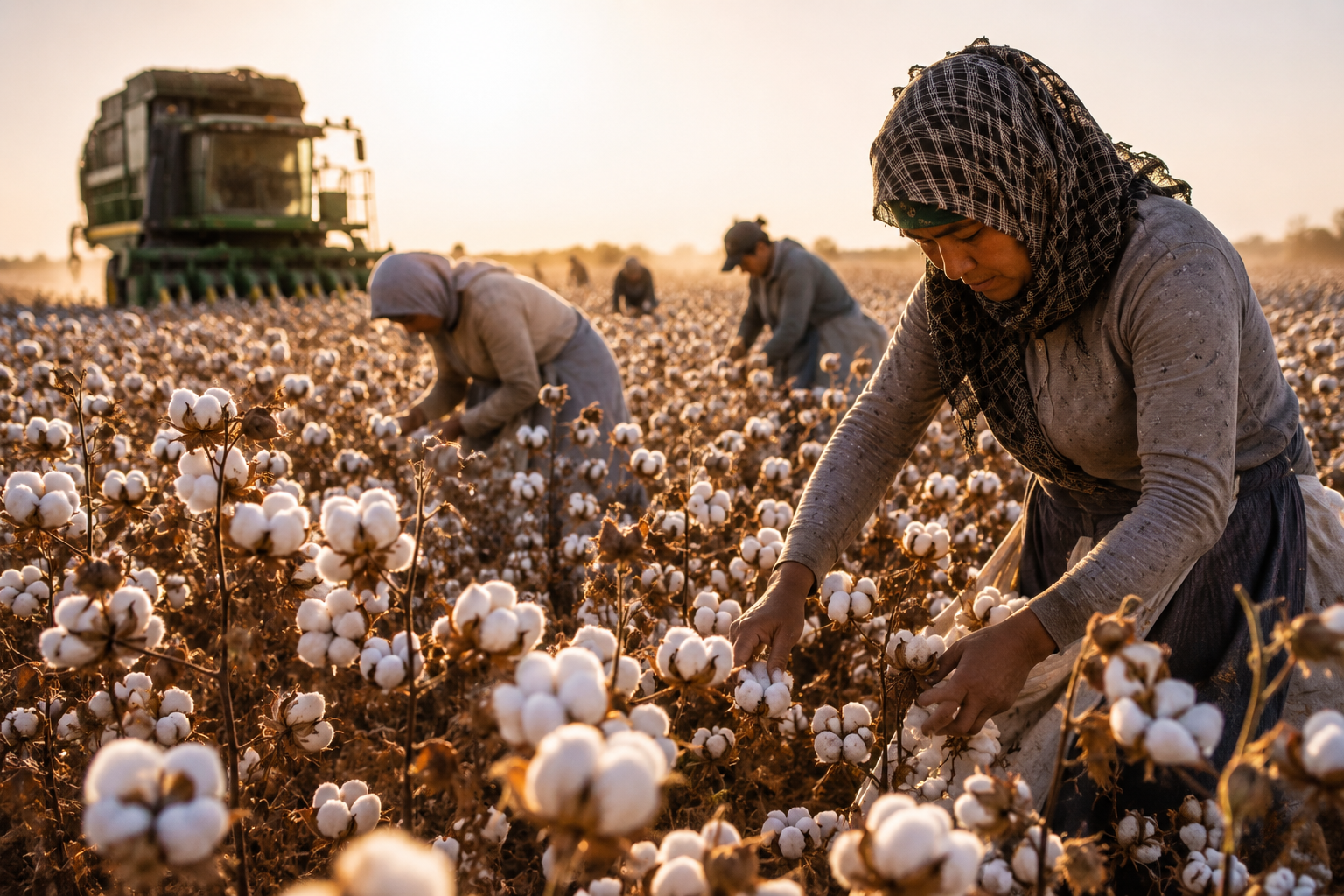
Cotton thread quality is decided in the field before any machine is involved.
Major Growing Regions
- India — the world’s largest cotton-growing area by acreage; Gujarat, Maharashtra, Telangana, and Punjab produce Shankar-6, DCH-32, and the extra-long-staple Suvin varieties.
- United States — Texas and the Mississippi Delta produce Upland cotton; the Southwest grows premium Pima.
- Egypt — the Nile Delta yields legendary Giza extra-long-staple cotton.
- China, Brazil, Pakistan, Australia, Turkey — round out the top producing nations.
Harvesting Methods
Hand-picking, still common across India, allows selective picking of fully mature bolls in multiple passes, yielding cleaner cotton with less trash — a genuine advantage for fine decorative-trim yarns. Machine harvesting (spindle pickers and strippers) dominates the US and Australia, prioritizing speed and volume, but collects more leaf and stem fragments that must be removed later.
Raw Cotton Quality Factors
| Factor | Measured By | Impact on Thread |
| Staple length | HVI (mm) | Longer = smoother, stronger thread |
| Micronaire | Fineness/maturity index | 3.8–4.5 ideal for fine spinning |
| Strength | Grams/tex | Directly sets yarn tenacity ceiling |
| Color grade | Reflectance (Rd) & yellowness (+b) | Affects dye uniformity |
| Trash content | Leaf grade | Higher trash = more cleaning damage |
Which cotton is best for thread manufacturing? Extra-long-staple (ELS) varieties — Egyptian Giza, American Pima, and Indian Suvin (staple 34–40 mm) — produce the finest, strongest, most lustrous threads and are the preferred choice for premium tassel yarns and mercerized decorative cords. Long-staple Indian Shankar-6 and DCH-32 offer excellent value for standard decorative trims.
Stage 2: The Ginning Process
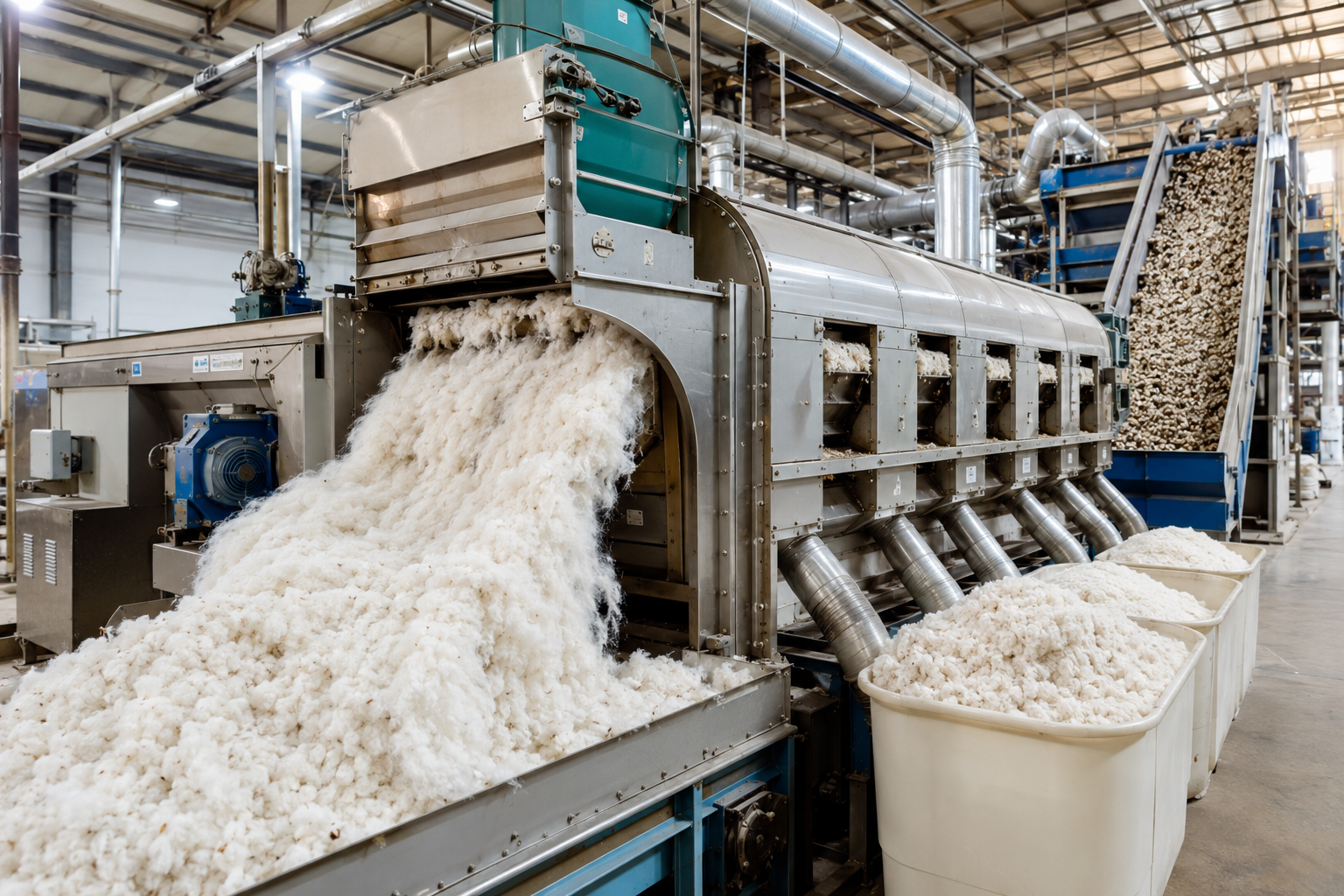
Freshly harvested seed cotton is roughly one-third fiber and two-thirds seed by weight. Ginning separates them.
Lint Separation and Seed Removal
Two ginning technologies dominate:
- Saw ginning — rotating circular saws grip the lint and pull it through narrow ribs that block the seeds. Fast and suited to shorter Upland cottons.
- Roller ginning — a leather-covered roller and knife gently strip fibers from seeds. Slower, but preserves staple length, which is why Indian ELS and Egyptian Giza cottons are almost always roller-ginned. For fine decorative-trim yarns, roller-ginned cotton is the superior input.
Bale Formation
Cleaned lint is hydraulically pressed into standardized bales — approximately 170 kg in India and 225 kg (480 lb) in the US — sampled, graded, tagged, and warehoused. Each bale carries an identity that enables full textile supply chain traceability, increasingly demanded by European and North American import regulations.
Stage 3: Opening and Cleaning (The Blow Room)
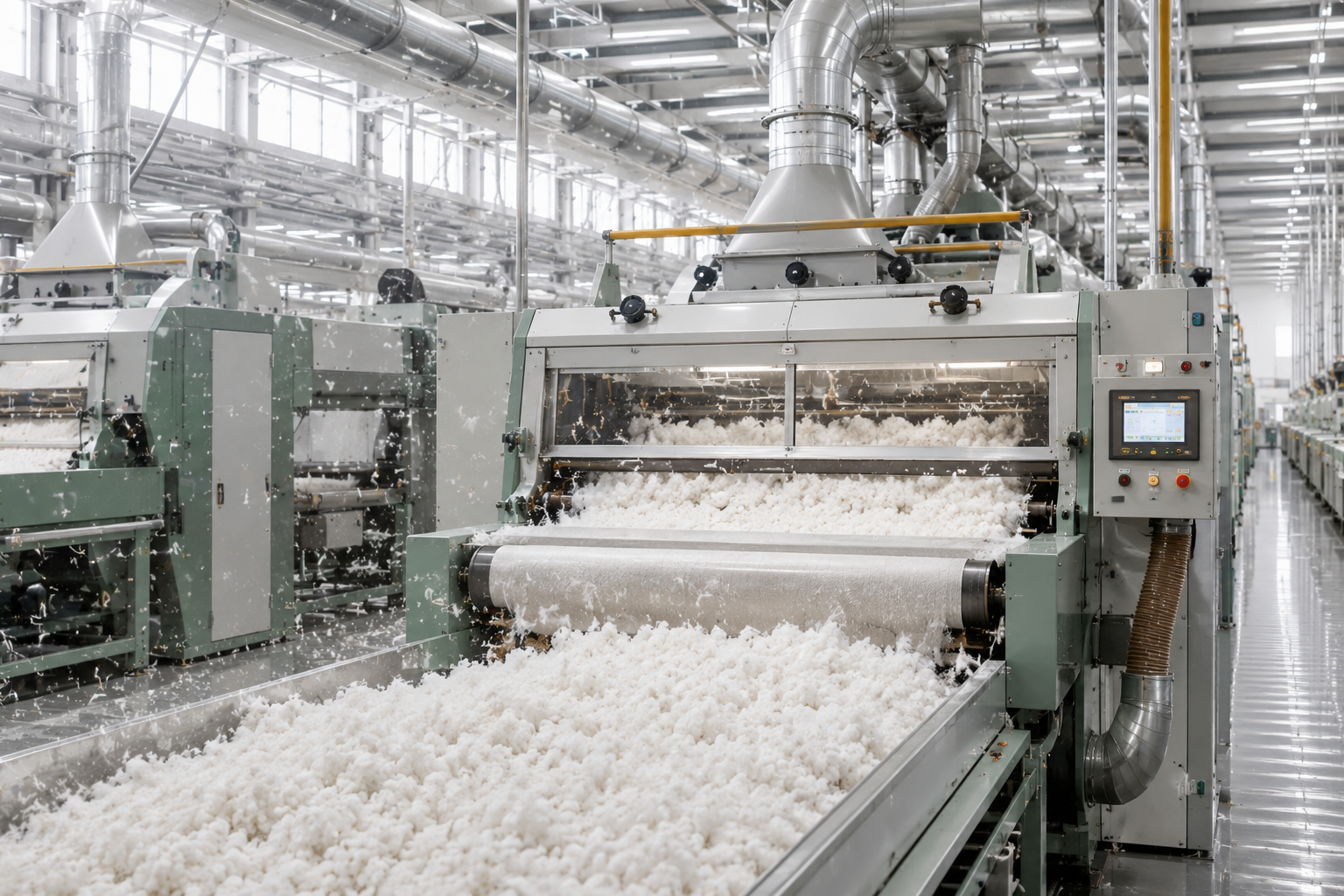
Compressed bales arrive at the spinning mill rock-hard. The blow room line reverses this.
- Bale pluckers travel across a laydown of 40–60 bales, shaving thin layers to blend cottons from multiple origins into one consistent mix.
- Beaters and openers break tufts progressively smaller, liberating sand, leaf, stem, and seed-coat fragments.
- Air-stream cleaners and dust cages extract micro-dust and foreign fibers; modern lines add optical sorters that eject colored contaminants (polypropylene strands, human hair, jute threads) — critical, because a single foreign fiber can ruin an entire dyed tassel lot.
The output is a continuous, fluffy, homogeneous sheet or flock of clean cotton, ready for the most important machine in the mill.
Stage 4: Carding — Fiber Alignment and Sliver Formation
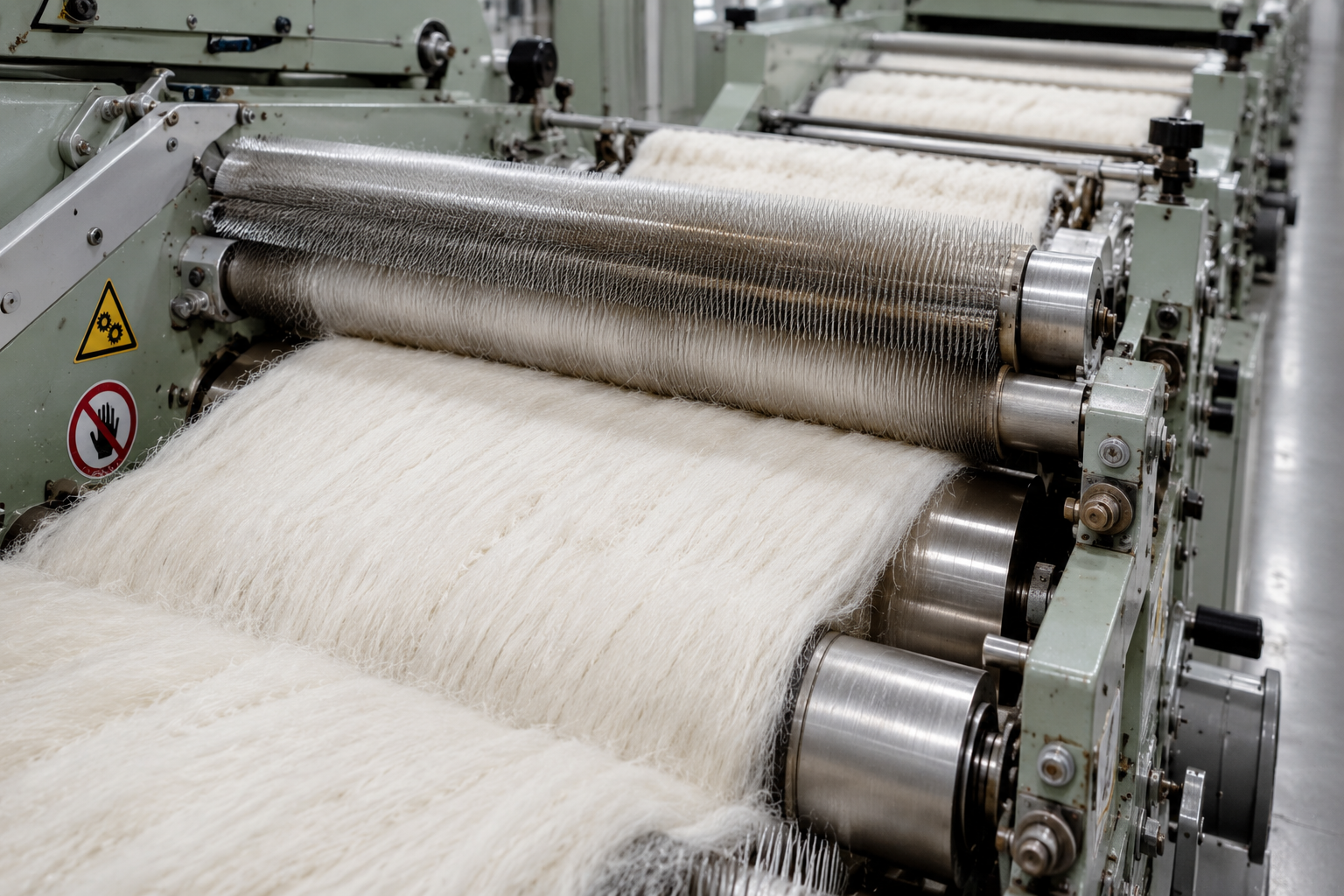
The carding machine passes clean cotton tufts between a large cylinder and flats covered with millions of fine wire points, moving at different speeds. This action:
- Individualizes every fiber from its neighboring tufts,
- Removes remaining short fibers, neps (tiny fiber knots), and trash,
- Roughly aligns fibers into a thin web, which is then condensed into a soft, untwisted rope called a card sliver (~4–5 g/m).
Why Carding Is Called the Heart of Spinning
Spinners worldwide repeat the same maxim: “Well carded is half spun.” No downstream process — not drawing, not spinning, not even dyeing — can repair fiber damage or remove neps that carding leaves behind. Card sliver quality sets the absolute ceiling for yarn evenness, strength, and appearance. A nep that survives carding becomes a visible white speck on a dyed navy cord; a poorly opened tuft becomes a thick place that snaps under tension in a tieback core. This is why quality-focused mills run cards slower than their rated speed and re-grind card wire on strict schedules — and why experienced trim manufacturers like Mohit Handicrafts qualify their yarn suppliers partly on carding discipline.
Stage 5: Combing — The Premium Cotton Thread Route
Combing is optional — and it is precisely what separates ordinary thread from premium thread.
The comber grips a fringe of fibers and passes fine-toothed circular combs through them, extracting 12–25% of the material: every fiber below a set length, plus residual neps and impurities. What remains is a sliver of long, parallel, almost luminous fibers.
Combed cotton thread delivers: – 15–20% higher tensile strength at the same count – Dramatically smoother, low-hairiness surface – Superior luster — the foundation for mercerized finishes – Cleaner, more uniform dye uptake
Every Tasselora luxury trim and every fine-gauge Mohit Handicrafts tassel yarn begins with combed cotton. Carded (non-combed) yarns remain the economical workhorse for rustic fringes, macrame cords, and heavier decorative ropes where texture is a design feature.
Stage 6: Drawing — Blending and Consistency
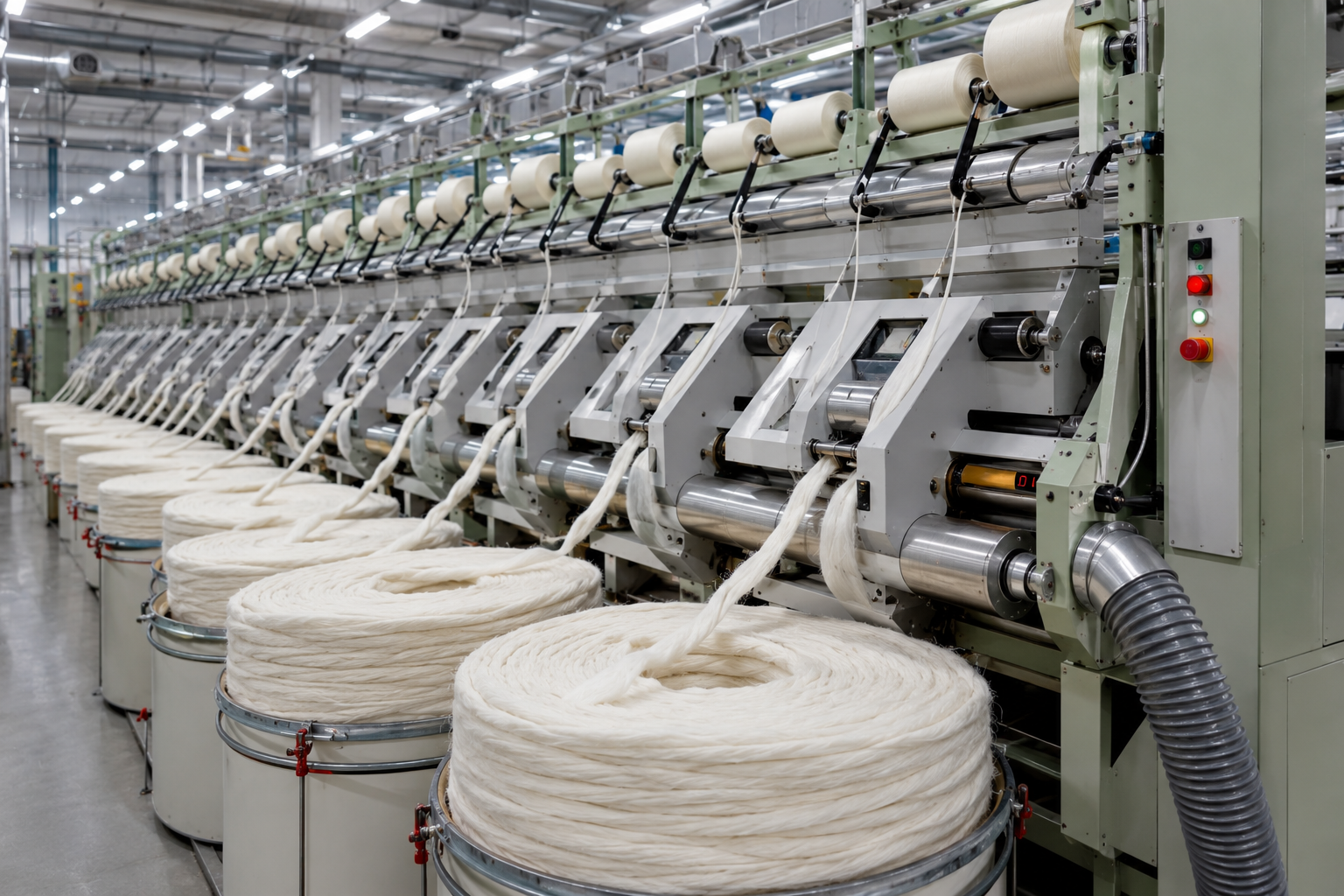
Drawing frames feed six to eight slivers side by side into pairs of rollers running at successively higher speeds, drafting them down into a single sliver of the same weight. Two to three drawing passes accomplish:
- Blending — doubling 8 slivers over 3 passes mixes fiber from 512 sliver-sources, averaging away any single card’s variation.
- Straightening — hooked fiber ends are pulled parallel, improving spinnability.
- Evenness — thick and thin places cancel out; autoleveller drawframes measure sliver thickness in real time and adjust draft instantly.
Consistency created here is what allows a wholesale buyer to reorder the same tieback cord twelve months later and receive an identical product.
Stage 7: Roving — Preparation Before Spinning
Drawn sliver is still ~100× too thick to spin directly. The speed frame (roving frame) drafts it down further and inserts a whisper of protective twist (roughly 1–1.5 turns per inch), winding the resulting pencil-thin strand — the roving — onto large bobbins. The twist is deliberately minimal: just enough to survive handling, loose enough to be drafted again at the spinning frame.
Stage 8: Spinning — Where Yarn Is Born
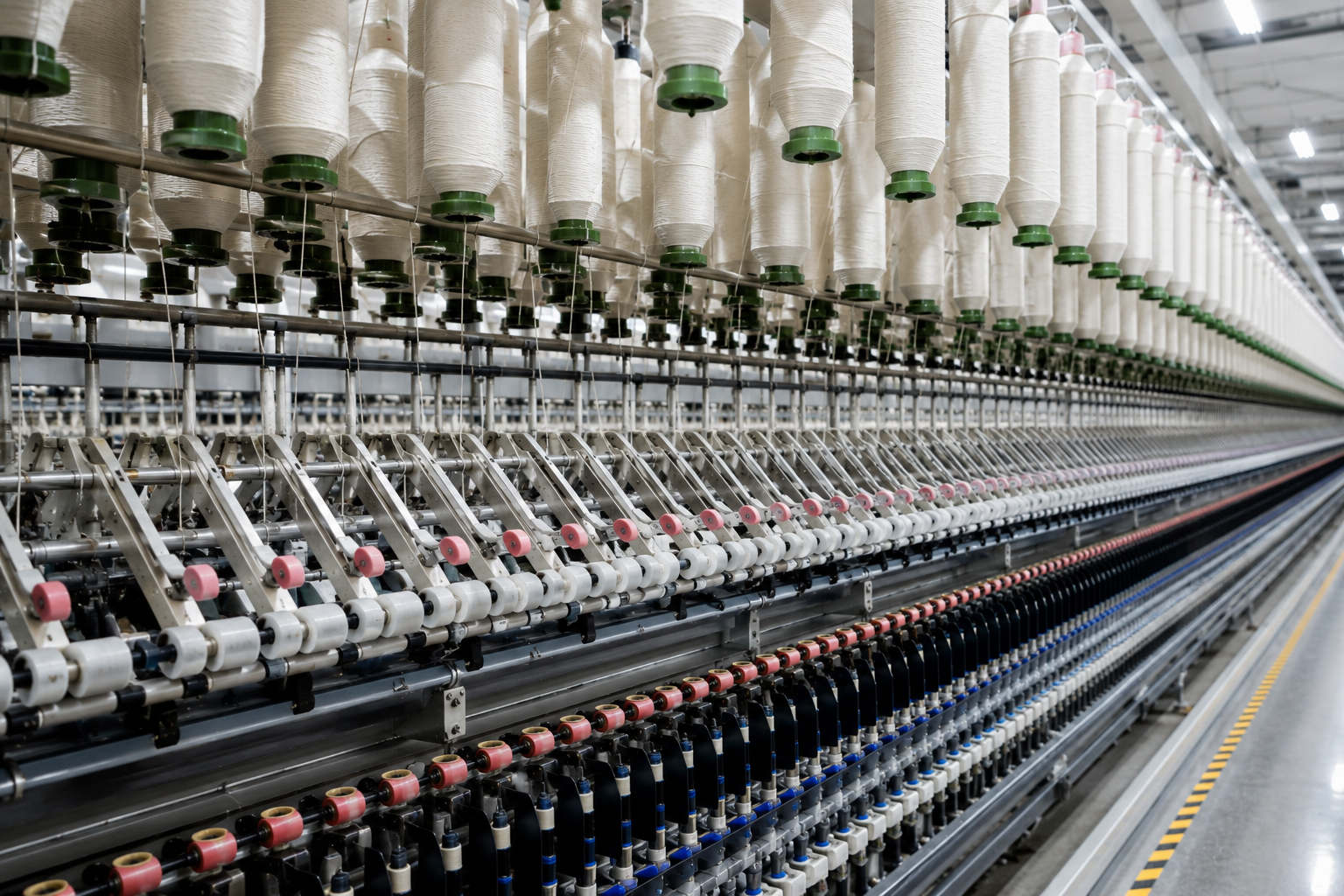
Spinning converts roving (or sliver) into continuous yarn by drafting it to final fineness and inserting permanent twist. Three systems dominate industrial cotton thread manufacturing.
Ring Spinning
The classical method and the quality benchmark. Roving is drafted between rollers, then twisted by a traveler orbiting a ring at up to 25,000 rpm while winding onto a spindle. Ring spinning handles the widest count range (very coarse to gossamer-fine) and produces the strongest, smoothest yarn structure, with fibers helically bound through the yarn core.
Open-End (Rotor) Spinning
Fibers are separated into an airstream, flung into a rotor spinning at up to 150,000 rpm, and twisted as they’re drawn off. It is 5–10× faster than ring spinning and skips the roving stage entirely — but yarns are 15–20% weaker, bulkier, and limited to coarse-to-medium counts. Ideal for economical macrame ropes and chunky rustic fringes.
Compact Spinning
A refinement of ring spinning that uses air suction to condense the fiber strand just before twist insertion, eliminating the “spinning triangle” where stray fibers escape. The result: yarn hairiness cut by up to 50%, strength raised ~10%, and a visibly cleaner surface — the premium choice for high-sheen tassel skirts and fine mercerized cords.
Spinning Systems Comparison Table
| Parameter | Ring Spinning | Open-End (Rotor) | Compact Spinning |
| Yarn strength | High | Moderate (−15–20%) | Highest (+10% vs ring) |
| Surface smoothness | Smooth | Coarse/bulky | Smoothest (−50% hairiness) |
| Count range | Ne 4 – Ne 120+ | Ne 4 – Ne 40 | Ne 20 – Ne 120+ |
| Production speed | Baseline | 5–10× faster | Similar to ring |
| Relative cost | Medium | Lowest | Highest |
| Best decorative-trim use | Tassels, tiebacks, fine cords | Macrame ropes, rustic fringes | Luxury mercerized trims |
Stage 9: Twisting and Strength Enhancement (Plying)
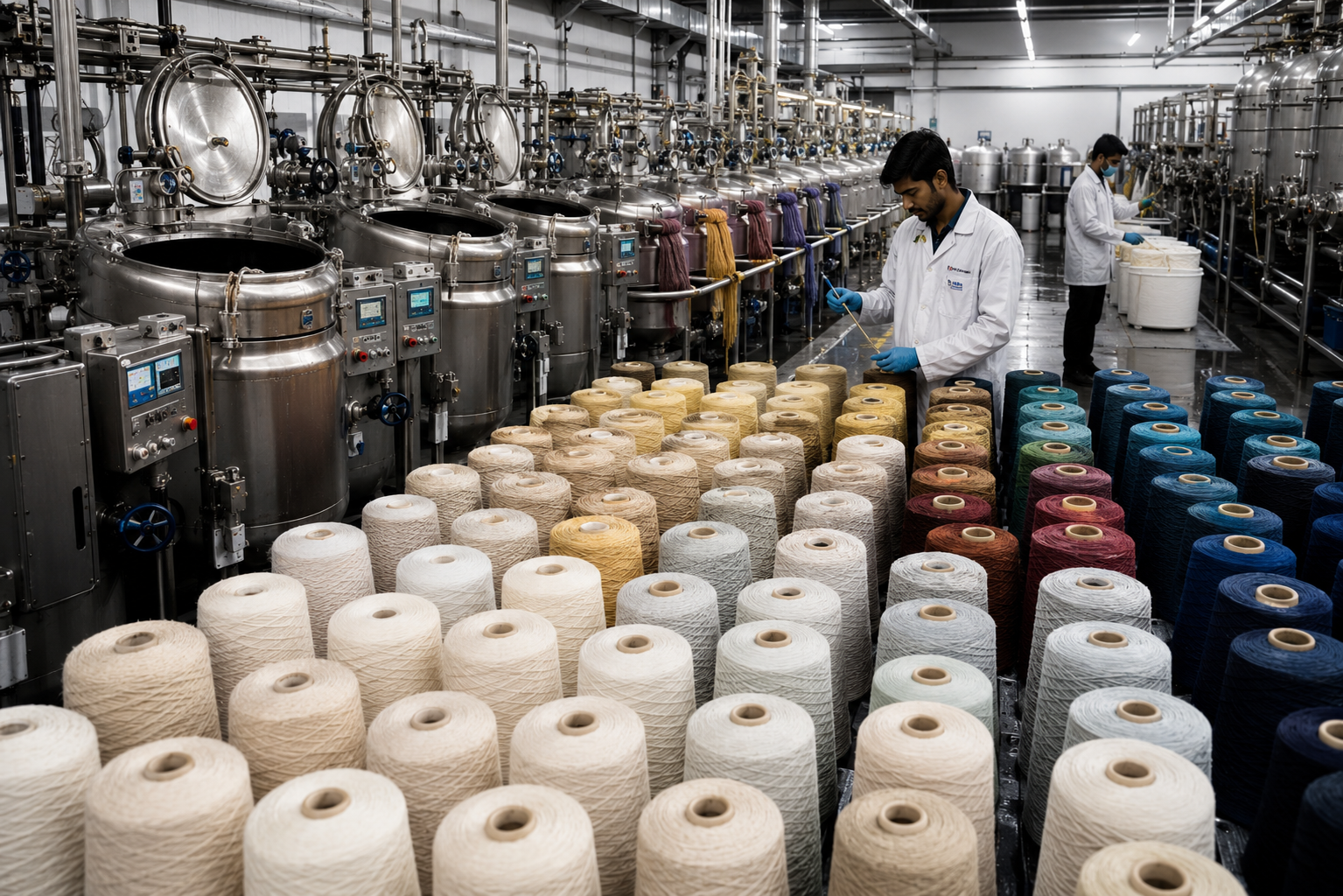
A single spun yarn is rarely used as “thread.” Threads are built by plying:
- 2-ply / 3-ply construction — two or three single yarns are twisted together, usually in the direction opposite to their original spin (S over Z). This balances residual torque so the thread hangs straight — essential for tassel skirts that must fall perfectly plumb.
- Cabling — plied yarns are twisted together again for heavy constructions: tieback cores, thick decorative ropes, and bullion fringe cords.
- Twist level tuning — higher twist = stronger, firmer, more abrasion-resistant; lower twist = softer, fuller, more lustrous. Trim manufacturers specify twist-per-meter precisely: a firm twist for load-bearing tieback cords, a softer twist for plush chainette tassel skirts.
Plying can multiply single-yarn strength by 2.2–2.5× while simultaneously evening out any remaining thick or thin places.
Stage 10: Winding and Packaging
Spinning bobbins hold only small lengths, so winding machines transfer and join yarn onto large packages while performing a final quality pass:
- Cone winding — yarn is wound onto tapered cones holding 1.5–3 kg, the standard package for dye houses and trim workshops. Electronic yarn clearers scan every meter, cutting out thick places, thin places, and foreign fibers; splicers rejoin the ends with knot-free, nearly invisible joins.
- Bobbin winding — smaller parallel-wound packages prepared for braiding machines, twisting frames, and specific trim-making equipment.
- Soft/dye packages — loosely wound perforated cones that allow dye liquor to circulate through the package during yarn dyeing.
Packages are then conditioned (moisture-balanced), wrapped, and cartoned for transport.
Stage 11: Dyeing and Finishing
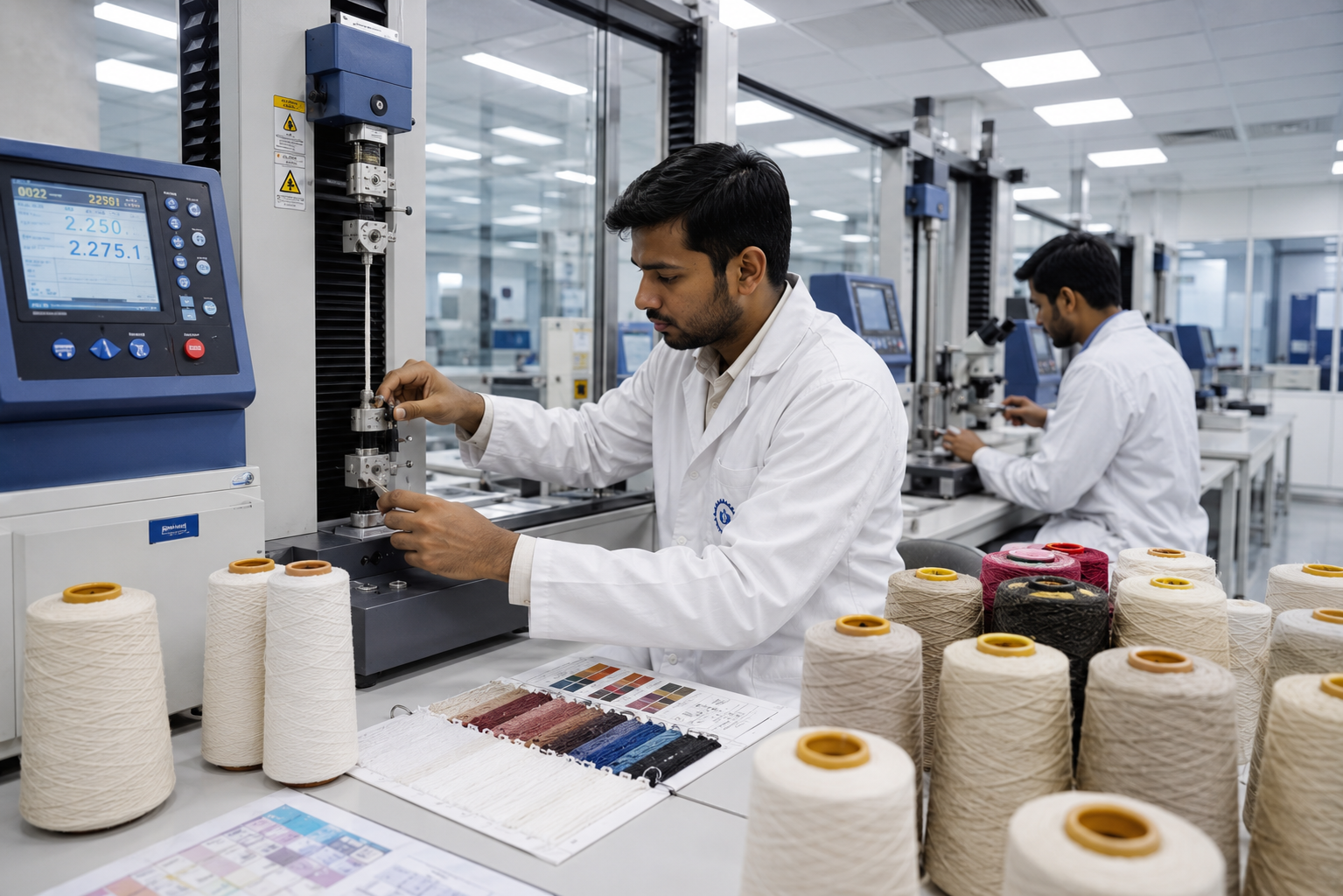
Color is where decorative trims come alive — and where technical rigor matters most.
Reactive Dyeing
The modern standard for cotton. Reactive dye molecules form covalent chemical bonds with cellulose, delivering brilliant shades and excellent wash-fastness across the full spectrum — from blush pinks to deep terracottas across all 15 color families in the Mohit Handicrafts palette.
Vat Dyeing
The gold standard for lightfastness. Indigo and other vat dyes are reduced to a soluble form, absorbed into the fiber, then oxidized back to insoluble pigment locked inside the fiber. Chosen for trims destined for sun-exposed hospitality installations — poolside cabana tiebacks, window-adjacent fringes — where fade resistance is non-negotiable.
Eco-Friendly Dyeing
Responsible mills now deploy low-liquor-ratio package dyeing (cutting water use by up to 50%), right-first-time computerized color matching, effluent treatment and water recycling, GOTS-approved dye chemistry, and OEKO-TEX® STANDARD 100 compliance ensuring no harmful residues. Natural-dye and undyed organic lines serve eco-positioned retail brands.
Finishing Treatments
- Mercerization — caustic treatment under tension that swells fibers permanently, boosting luster ~25%, strength, and dye depth. The signature finish of premium tassel threads.
- Gassing (singeing) — flame-passing the thread to burn off surface fuzz for a clean, polished look.
- Lubrication/waxing — reduces friction for high-speed braiding and twisting operations.
- Softening — silicone-free softeners for a luxurious hand-feel in Tasselora collections.
Quality Control in Cotton Thread Manufacturing
How long does thread production take? From opened bale to tested, dyed cone: typically 2–4 weeks, including 5–7 days of spinning-mill processing, 3–5 days of dyeing and finishing, and laboratory testing plus conditioning time. Custom-dyed wholesale trim orders at Mohit Handicrafts typically run 4–6 weeks including trim fabrication.
Core Laboratory Tests
| Test | Instrument/Method | Standard | Acceptable Benchmark |
| Tensile strength & elongation | Uster Tensorapid / ASTM D2256 | ISO 2062 | ≥15 cN/tex (combed ring yarn) |
| Yarn count accuracy | Wrap reel & balance | ISO 2060 | ±2.5% of nominal Ne |
| Evenness (U%/CVm) | Uster Evenness Tester | Uster Statistics | Better than Uster 25% level |
| Imperfections (IPI) | Thin/thick/neps per km | Uster Statistics | Count-dependent; premium < 150/km |
| Hairiness | Uster H-index | — | H < 5 for smooth trims |
| Colorfastness to washing | ISO 105-C06 | Grey scale 1–5 | ≥ 4 |
| Colorfastness to light | ISO 105-B02 (Xenon) | Blue wool 1–8 | ≥ 5 (≥6 for hospitality) |
| Colorfastness to rubbing | ISO 105-X12 Crockmeter | Grey scale 1–5 | ≥ 4 dry / ≥ 3–4 wet |
| Shrinkage | Boiling water / ISO 3005 | % length change | < 3% |
| Twist | Twist tester ISO 2061 | TPM | ±5% of specification |
At the trim-manufacturing stage, Mohit Handicrafts adds multi-stage inline inspection: incoming yarn lot verification against retained standards, shade-band approval under D65 lighting, in-process checks during twisting and braiding, and final piece-by-piece inspection before export packing.
Types of Cotton Threads Used in Decorative Trim Manufacturing
Mohit Handicrafts’ fiber portfolio includes Cotton (COT), Staple Cotton (SCT), and Cotton Chainette (CCH) among 20 fiber categories — and each behaves differently in trim construction.
Cotton Chainette
A tubular, machine-knitted “yarn made of yarn” with a supple, rounded body and beautiful drape. The premier choice for tassel skirts that must hang full and swing fluidly, and for soft-bodied fringes.
Mercerized Cotton
Caustic-treated combed cotton with silk-like luster, deeper dye shades, and added strength. Specified for luxury tassels, sheen-forward tiebacks, and fine decorative cords — the backbone of Tasselora’s premium palette.
Twisted Cotton Cord
Two to four plied strands cabled in rope fashion, producing the classic spiral surface. Used for curtain tiebacks, lip cords, edge piping, and decorative ropes in diameters from 2 mm to 40 mm+.
Braided Cotton Cord
Eight to thirty-two carriers interlace yarns into a round or flat braid that resists unraveling and holds shape under load. Ideal for structured tiebacks, handles, flat trims, and macrame foundations.
Cotton Tassel Yarn
Soft-twist, high-bulk plied yarns engineered for cut ends that bloom attractively rather than fraying wildly — the working material of every hand-finished tassel skirt in the Mohit Handicrafts workshop.
How Cotton Threads Are Used in Decorative Trims
Each Mohit Handicrafts product category places distinct demands on the thread:
Tassels
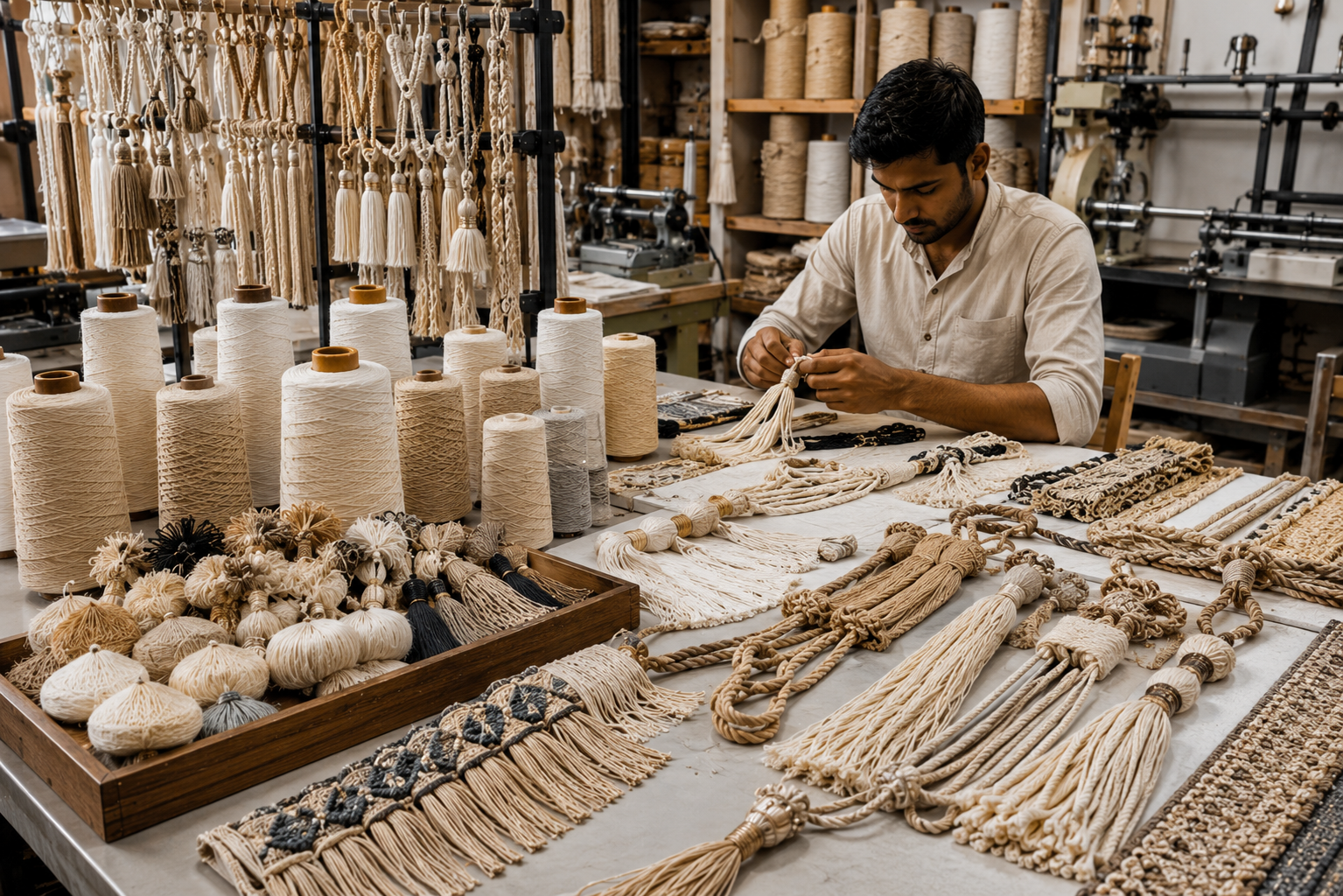
A tassel is thread architecture: a bound head (often over a wooden mold), a decorative neck wrap, and a free-hanging skirt of hundreds of cut ends. Skirt yarns need soft twist and high bulk for fullness; neck wraps need firm mercerized threads for crisp definition. Explore tassels →
Curtain Tiebacks
Tiebacks are load-bearing. Cabled cotton cores deliver the tensile strength to hold heavy drapery daily for years, while mercerized wrap threads provide the visual finish. Rub-fastness ratings matter here more than anywhere — a tieback is handled every single day. Explore tiebacks →
Decorative Fringes
Chainette fringe, cut fringe, loop fringe, tassel fringe, and bullion fringe each demand specific yarn engineering: chainette for fluid movement, hard-twist cabled yarns for the sculptural spirals of bullion. Evenness is everything — a single thick yarn reads as a visible flaw across a running meter. Explore fringes & trims →
Braided Cords
From 2 mm lip cords sewn into upholstery seams to statement 40 mm ropes, cords rely on precise twist balance so they lie flat, corner cleanly, and never kink. Explore cords & lip cords →
Macrame Products
Macrame is knot engineering. Single-twist and 3-ply cotton ropes must hold knot definition while combing out into feathered fringes on demand. Natural and organic cotton dominate this category for its artisanal, eco-conscious market. Explore macrame →
Why Cotton Thread Remains the Preferred Choice for Premium Decorative Trims
Why do manufacturers prefer cotton threads? Because no other fiber matches cotton’s combination of dye brilliance, natural hand-feel, strength, workability, and sustainability credentials at accessible cost.
- Sustainability — biodegradable, renewable, and available in certified organic and Better Cotton sourced forms; increasingly a purchase requirement for European retailers and hospitality groups.
- Appearance — cotton’s matte-to-mercerized luster range covers every design language from rustic farmhouse to French chateau.
- Softness — a tactile warmth synthetic trims cannot replicate; guests touch tiebacks and tassels daily.
- Dyeability — cellulose bonds covalently with reactive dyes, producing saturated, wash-fast shades across all fifteen Mohit Handicrafts color families, from White/Ivory/Cream to Multicolor/Mixed.
- Strength & workability — sufficient tenacity for load-bearing trims, with the knot-holding friction that hand-craftsmanship (and macrame in particular) depends on.
How Wholesale Buyers Can Evaluate Cotton Thread Quality: The Procurement Checklist
Use this checklist before confirming any bulk decorative-trim order:
Fiber & Yarn Specifications – [ ] Cotton origin and staple type declared (carded vs combed; long-staple vs ELS)? – [ ] Yarn count (Ne or Nm) and ply construction documented? – [ ] Twist direction and TPM specified for cords and ropes?
Performance Testing – [ ] Tensile strength report available (ISO 2062)? – [ ] Colorfastness ratings: washing ≥4, rubbing ≥4 dry, light ≥5 (≥6 for sun-exposed installs)? – [ ] Shrinkage below 3%?
Visual & Physical Sample Checks – [ ] Physical sample matches approved shade under D65 lighting? – [ ] Surface free of neps, slubs, and foreign fibers? – [ ] Cut ends bloom cleanly (tassels) / cord lies flat without kinking?
Compliance & Supply Chain – [ ] OEKO-TEX® STANDARD 100 or equivalent chemical-safety compliance? – [ ] Organic (GOTS) or Better Cotton documentation if claimed? – [ ] Lot traceability and shade-continuity guarantee for repeat orders?
Commercial – [ ] MOQ, lead time (typically 4–6 weeks custom), and packing specification confirmed? – [ ] Pre-shipment inspection photos/video offered?
A manufacturer who answers all of these quickly and in writing is a manufacturer you can scale with.
Mohit Handicrafts Manufacturing Expertise
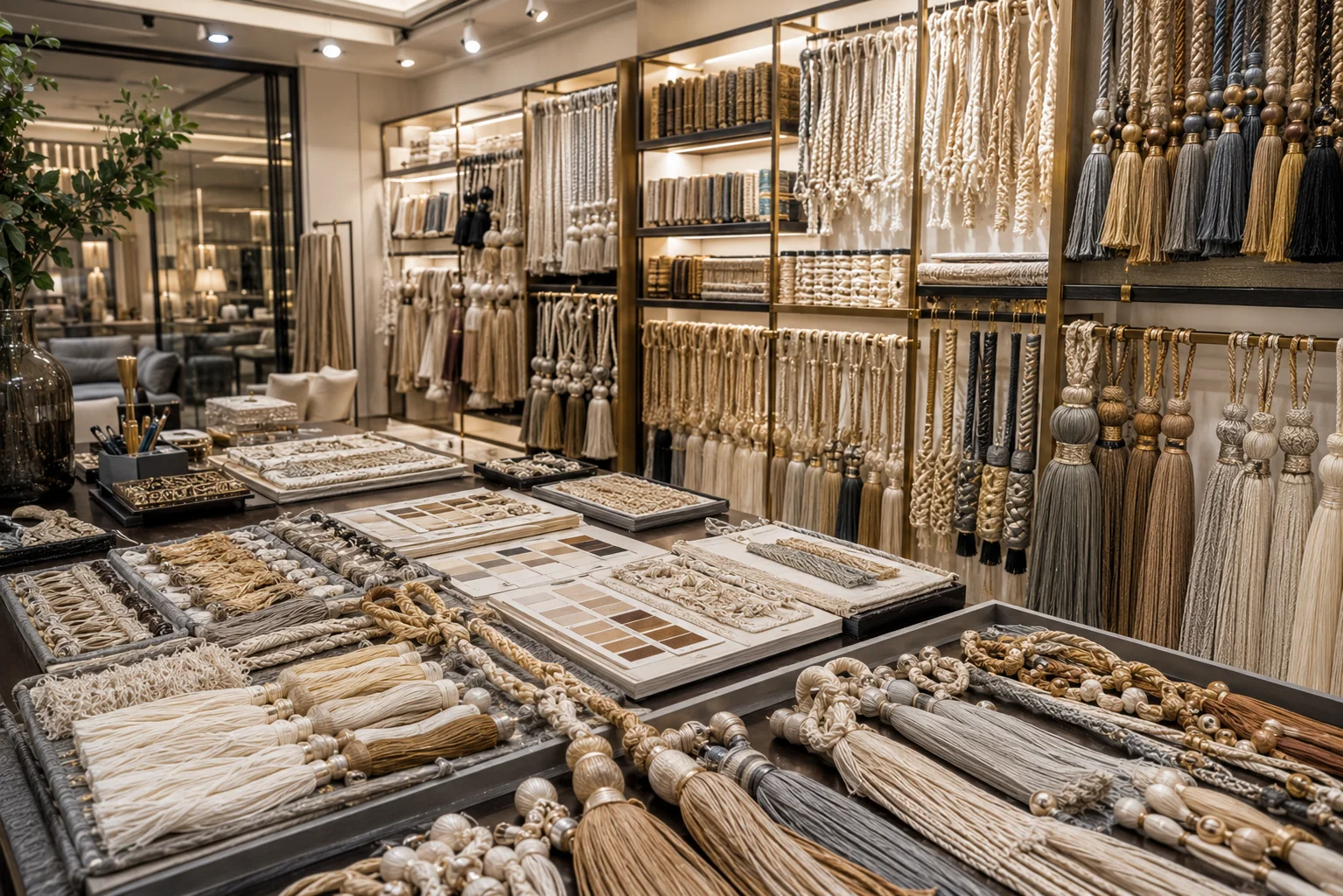
Mohit Handicrafts has manufactured handcrafted textile trims in Delhi, India since 2002, exporting to wholesale buyers, importers, distributors and brands across 30-plus countries. Our production spans the full decorative trims catalogue – tassels, curtain tiebacks, fringes and decorative trims, cords and lip cords, macrame, tufts, coasters and Christmas ornaments – across a 20-fiber catalogue that includes cotton, staple cotton, cotton chainette, linen and linen chainette.
Cotton Thread Manufacturing Challenges and Industry Trends
- Sustainability pressure — water stewardship in dyeing, chemical compliance (ZDHC), and carbon reporting are moving from “nice to have” to import prerequisites in the EU.
- Organic cotton growth — GOTS-certified organic thread demand keeps rising in home décor, especially macrame and natural-tone trims.
- Recycled fibers — recycled-cotton blends are entering trim manufacturing; expect certified recycled content requirements from major retail chains.
- Automation — robotic bale handling, self-optimizing cards, and automated winding are raising consistency while easing skilled-labor shortages.
- AI textile inspection — camera-and-AI systems now detect yarn faults and shade drift in real time, reducing claims and improving right-first-time dyeing — technology that ultimately protects wholesale buyers from lot-to-lot variation.
- Traceability — digital product passports and fiber-forensic verification are coming to decorative textiles; suppliers with documented supply chains will win the next decade.
Why Global Buyers Source Decorative Trims from Indian Manufacturers
India occupies a unique position in the global trims trade:
- Craftsmanship — generations-deep hand skills in tassel making, braiding, knotting, and macrame that machines still cannot replicate.
- Raw material advantage — direct access to the world’s largest cotton acreage and a complete domestic spinning-dyeing ecosystem.
- Scalability — the same workshop culture that hand-finishes a sample can organize hundreds of artisans for container-volume programs.
- Export capability — mature logistics corridors, export documentation expertise, and duty advantages into many markets.
- Customization — low tooling costs make bespoke colors, sizes, and constructions economically viable even at moderate MOQs.
Mohit Handicrafts embodies this advantage: a Delhi-headquartered manufacturer and exporter serving global B2B buyers since 2002, combining traditional Indian handicraft techniques with contemporary design sensibilities and international quality standards.
Why Choose Mohit Handicrafts for Cotton-Based Decorative Trims
- 20+ years of manufacturing expertise — established 2002, with two decades of specialized decorative-textile production knowledge.
- Complete product range — tassels, curtain tiebacks and holdbacks, fringes and decorative trims, cords and lip cords, ropes, macrame products, tufts, coasters, and Christmas ornaments.
- Custom manufacturing — bespoke colors across 15 color families, 20 fiber options including cotton, staple cotton, and cotton chainette, and made-to-specification constructions.
- Wholesale-scale production — engineered for bulk B2B orders from importers, distributors, retail chains, furniture manufacturers, and hospitality groups.
- Export capability — seamless global shipping, eco-friendly packaging, and efficient international logistics partnerships.
- Rigorous quality control — multi-stage inspection from incoming yarn to final export packing.
Request a quote: info@mohithandicraft.com | +91 9999405048 | WhatsApp +91 9810337952 Visit: G-12/2, Street No.4, Brahmpuri, Shahdara, Delhi-110053, India
Why Choose Tasselora for Luxury Cotton Trims
Tasselora is the premium expression of the same manufacturing foundation:
- Premium positioning — exclusively high-end tassels, tiebacks, fringes, cords, and decorative accessories built on combed, mercerized, and ELS cotton threads.
- Luxury collections — curated seasonal palettes and heritage-inspired designs for boutique interiors, five-star hospitality, and luxury retail.
- Designer collaborations — co-development programs with interior designers and home-furnishing brands, from mood board to production sample.
- Bespoke developments — one-of-a-kind constructions, custom dye matching to fabric swatches, and white-label programs for premium brands.
Conclusion: From Fiber Science to Your Next Container
Every premium tassel, tieback, fringe, cord, and macrame piece begins its life as a cloud of cotton in a ginning shed. The eleven stages between field and finished trim — and the discipline applied at each one — are what separate trims that delight customers for a decade from trims that fade, fray, and generate claims.
Now that you understand the process, put that knowledge to work with a manufacturing partner who lives it daily.
Request a Quote (RFQ)
Send your specification — product type, dimensions, fiber preference, target colors, and quantities — to info@mohithandicraft.com and receive a detailed wholesale quotation.
Bulk Order Enquiries
Container-volume programs, blanket orders with call-offs, and seasonal production planning available for high-volume buyers.
For Importers
Full export documentation, eco-friendly packing, consolidated shipping support, and pre-shipment inspection media provided as standard.
For Distributors
Territory programs, consistent shade continuity across reorders, and fast sampling to help you win local projects.
For Interior Designers
Bespoke color matching to your fabric schemes, custom sizes, and low-friction sampling through Tasselora’s designer program.
For Hotel & Hospitality Procurement
Contract-grade specifications, enhanced lightfastness options, project-scale scheduling, and durable constructions engineered for daily guest handling.
Mohit Handicrafts — B2B Manufacturer & Global Exporter of Decorative Textile Trims since 2002 📍 G-12/2, Street No.4, Brahmpuri, Shahdara, Delhi-110053, India 📧 info@mohithandicraft.com | 📞 +91 9999405048 | 💬 WhatsApp: +91 9810337952
For luxury and designer collections, explore Tasselora — premium decorative trims, bespoke developments, and designer collaborations.
